-
منوی اصلیبستن
-
Dental
-
-
-
Gloves
-
-
-
Gloves
-
-
-
Gloves
-
-
-
Gloves
-
-
-
Dental Finishing & Polishing
-
-
-
Gloves
-
-
-
Gloves
-
-
-
Gloves
-
-
-
Gloves
-
-
-
Gloves
-
-
-
Gloves
-
-
-
-
Gloves
-
-
-
Gloves
-
-
-
Gloves
-
-
-
-
-
Gloves
-
-
-
Gloves
-
-
-
Gloves
-
-
-
Gloves
-
-
-
Gloves
-
-
-
Gloves
-
-
-
Gloves
-
-
-
- Mag
-
Laboratory
-
-
Laboratory Equioment
-
-
-
-
Lab
-
-
-
Medical
-
-
-
-
تجهیزات تشخیص
-
تجهیزات عکس برداری
-
-
-
- Help
-
Corporate
-
- Login/ Register


-
منوی اصلیبستن
-
Dental
-
-
-
Gloves
-
-
-
Gloves
-
-
-
Gloves
-
-
-
Gloves
-
-
-
Dental Finishing & Polishing
-
-
-
Gloves
-
-
-
Gloves
-
-
-
Gloves
-
-
-
Gloves
-
-
-
Gloves
-
-
-
Gloves
-
-
-
-
Gloves
-
-
-
Gloves
-
-
-
Gloves
-
-
-
-
-
Gloves
-
-
-
Gloves
-
-
-
Gloves
-
-
-
Gloves
-
-
-
Gloves
-
-
-
Gloves
-
-
-
Gloves
-
-
-
- Mag
-
Laboratory
-
-
Laboratory Equioment
-
-
-
-
Lab
-
-
-
Medical
-
-
-
-
تجهیزات تشخیص
-
تجهیزات عکس برداری
-
-
-
- Help
-
Corporate
-
- Login/ Register
- Home
- Dental Online Shop - Distributor & Supplier
- Implant & Surgery
- Bone Grafting Material
- Bone Powder and Graft
- Xenograft
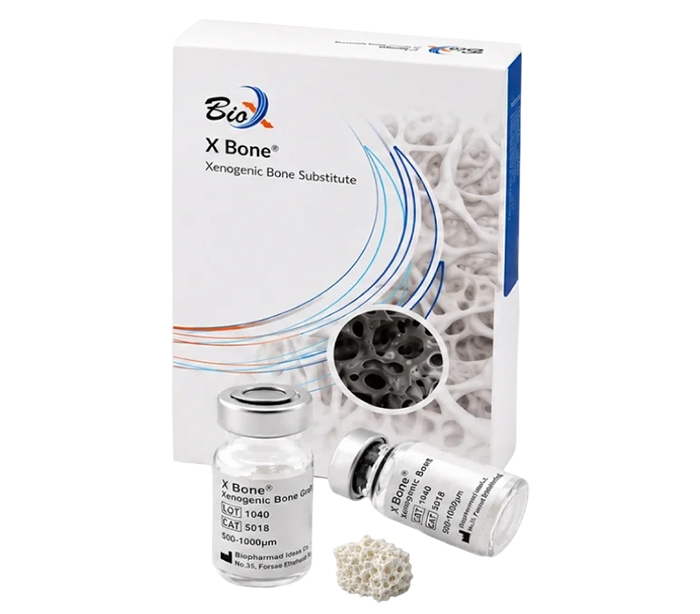
- BioX - X-Bone Xenograft Bone Powder
BioX - X-Bone Xenograft Bone Graft for Dental Bone Regeneration - Dandal Volume V 1cc Particle size H 150-1000µm
-
In line with the demand of Dandal site customers for credit purchases, Dandal in cooperation with Saman Bank has provided a new service for dental and medical offices and treatment centers, which customers can use a credit card from the site at any time without any cash support.
- More Info
نکات خرید این محصول
تاریخ مصرف و بستهبندی
تاریخ مصرف، سلامت بستهبندی و شرایط نگهداری کالا را پیش از مصرف بررسی کنید.
کاربرد و سازگاری
کاربرد کالا را با نوع درمان، برندهای مورد استفاده و دستور سازنده تطبیق دهید.
شرایط نگهداری
دما، نور و رطوبت را مطابق اطلاعات درجشده روی بستهبندی یا توضیحات محصول رعایت کنید.
ارسال و موجودی
موجودی کالا بهروز است و زمان ارسال پیش از پرداخت نهایی نمایش داده میشود.

BioX X-Bone Xenograft Bone Powder
Bovine-Derived Xenograft Bone Graft for Dental Bone Regeneration
BioX X-Bone is a bovine-derived xenograft bone graft material designed for regenerative procedures in implant dentistry, periodontology, and oral surgery.
During manufacturing, bovine bone undergoes controlled physical and chemical processing to remove organic components while preserving its highly porous mineral architecture. The resulting inorganic bone matrix functions primarily as an osteoconductive scaffold, providing a three-dimensional framework for cellular migration, osteoblast attachment, vascular ingrowth, and gradual new bone formation.
The porous mineral architecture of X-Bone also contributes to regenerative space maintenance, making it suitable for procedures including Guided Bone Regeneration (GBR), ridge preservation, sinus augmentation, periodontal bone regeneration, and implant site development.
Porous Mineral Bone Matrix
An effective xenograft should provide a stable structure that allows new bone to progressively develop around and within the graft particles.
Following removal of organic components, X-Bone retains a porous inorganic mineral matrix resembling the native architecture of cancellous bone.
This structure provides:
- A scaffold for osteogenic cell migration
- Appropriate surface characteristics for osteoblast attachment
- Interparticle spaces for cellular and vascular penetration
- Support for new bone formation
- Maintenance of the regenerative compartment
- Structural stability during the early phases of healing
Key Features of BioX X-Bone
- Bovine-Derived Xenograft
X-Bone is derived from bovine bone and belongs to the category of bovine-derived xenogeneic bone graft materials.
The preserved mineral architecture acts as a biocompatible scaffold for bone regeneration and provides gradual structural support within grafted sites.
- High-Purity Mineral Matrix
The manufacturing process removes organic components from the source bone while maintaining the inorganic mineral framework.
The resulting mineral scaffold supports gradual bone ingrowth and provides structural support within the regenerative site.
- Porous Osteoconductive Architecture
X-Bone features a porous surface and interconnected mineral structure designed to promote close interaction between the graft, blood clot, surrounding tissue, and bone-forming cells.
The porous architecture facilitates:
- Cellular adhesion
- Cellular migration
- Osteoblast penetration
- Vascular ingrowth
- Progressive new bone formation
X-Bone primarily functions as an osteoconductive bone graft, providing a scaffold along which newly formed bone can grow.
- Regenerative Space Maintenance
Maintaining an adequate regenerative compartment is an important principle of Guided Bone Regeneration.
The mineral particles of X-Bone provide relatively long-lasting structural support and may help maintain graft volume and regenerative space during healing.
- Biocompatible Scaffold
Controlled processing and removal of organic components are intended to minimize potentially immunogenic material while preserving a mineral matrix compatible with regenerative tissue.
This makes X-Bone suitable for a broad range of dental bone augmentation procedures.
- Processing and Sterilization
X-Bone undergoes a multi-stage manufacturing and quality-control process.
Processing includes:
- Removal of organic components
- Controlled physical and chemical treatment
- High-temperature thermal processing
- Terminal gamma irradiation
- Microbiological and quality-control procedures
High-temperature treatment combined with gamma irradiation is used to achieve a high level of microbiological safety and minimize the risk of pathogenic contamination.
Raw materials are obtained from controlled and approved sources, and manufacturing is performed under an ISO 13485 quality management system.
Clinical Applications
Guided Bone Regeneration – GBR
X-Bone may be used as a grafting material in Guided Bone Regeneration procedures.
The particles are placed within the osseous defect and are commonly covered with an appropriate barrier membrane. The graft helps maintain the regenerative compartment while providing an osteoconductive scaffold for progressive bone formation.
Potential GBR applications include:
- Dehiscence defects
- Fenestration defects
- Horizontal ridge augmentation
- Peri-implant bone regeneration
- Localized osseous defects
according to clinical indication and surgical protocol.
- Ridge Preservation
Following tooth extraction, remodeling of the alveolar process may result in progressive loss of ridge width and height.
Placement of X-Bone within an extraction socket may assist in maintaining the alveolar contour and preparing the site for future implant therapy.
- Sinus Augmentation
X-Bone can be used in sinus lift and sinus augmentation procedures.
The xenograft is placed within the created subantral space and functions as a mineral scaffold for progressive new bone formation.
Larger granule sizes may be selected for sinus augmentation procedures when increased interparticle space and volume stability are desired.
- Implant Site Development
When inadequate bone volume compromises ideal implant positioning, X-Bone can be used for implant site development either before or in conjunction with implant placement, depending on the clinical situation.
- Periodontal Bone Defects
X-Bone may also be incorporated into selected regenerative periodontal procedures according to defect morphology and the clinician's treatment plan.
Particle Sizes and Clinical Selection
Particle size influences graft handling, packing density, interparticle porosity, space maintenance, and clinical behavior.
- 1000–2000 μm
Coarse particles in the 1000–2000 μm range may be selected for procedures requiring greater volume stability and larger interparticle spaces.
A common application is:
- Sinus Lift / Sinus Augmentation
The larger particle size can provide increased spacing between granules and may support long-term maintenance of the augmented compartment.
- 500–1000 μm
Particles in the 500–1000 μm range are suitable for a broad range of bone regenerative procedures, including:
- Guided Bone Regeneration
- Ridge Preservation
- Localized osseous defects
- Peri-implant bone augmentation
- Implant Site Development
- 150–1000 μm
This particle range may also be used in GBR and advanced implant-related bone augmentation procedures according to clinician preference and defect characteristics.
The appropriate granule size should be selected according to defect morphology, graft volume, surgical technique, desired handling characteristics, and the clinician's treatment protocol.
Resorption and Remodeling Period
Xenograft bone substitutes generally exhibit slower degradation than some other categories of bone graft materials.
This relatively gradual resorption may be beneficial when prolonged maintenance of graft volume and regenerative space is required.
The approximate resorption/remodeling period reported for BioX bone graft materials is 6–8 months.
The actual remodeling rate may vary according to:
- Surgical site
- Graft volume
- Particle size
- Local vascularity
- Patient-related factors
- Surgical technique
Benefits of BioX X-Bone
- Bovine-derived xenograft bone graft
- High-purity inorganic mineral matrix
- Removal of organic components
- Porous three-dimensional architecture
- Osteoconductive properties
- Provides a scaffold for new bone formation
- Supports osteoblast attachment and cellular migration
- Facilitates bone ingrowth
- Supports regenerative space maintenance
- Suitable for Guided Bone Regeneration
- Suitable for ridge preservation
- Applicable to sinus augmentation
- Suitable for implant site development
- Can be used in selected periodontal osseous defects
- Multi-stage controlled processing
- High-temperature thermal treatment
- Terminal gamma irradiation
- Manufactured under an ISO 13485 quality management system
- Available in different particle sizes for various clinical indications
Technical Specifications
- Product Name: X-Bone
- Brand: BioX
- Product Type: Xenograft Bone Graft
- Form: Bone Powder / Granules
- Origin: Animal-Derived – Bovine
- Source Material: Bovine Bone
- Graft Classification: Xenogeneic Bone Graft
- Structure: Porous Inorganic Bone Mineral Matrix
- General Composition: Inorganic Bone Mineral
- Organic Components: Removed during processing
- Primary Biological Function: Osteoconduction
- Scaffold Type: Porous Mineral Scaffold
- Particle Sizes: 150–1000 μm, 500–1000 μm and 1000–2000 μm depending on available configuration
- Processing: Controlled physical, chemical, and thermal processing
- Terminal Sterilization: Gamma Irradiation
- Sterility: Sterile
- Approximate Resorption / Remodeling Period: 6–8 months
- Quality Management System: ISO 13485
- Primary Indication: Bone Regeneration
- Clinical Applications: GBR, Ridge Preservation, Sinus Augmentation, Periodontal Bone Defects, and Implant Site Development
- Clinical Fields: Implantology, Periodontology, and Oral Surgery
- Use: Single-use
- Intended Users: Dentists, Implant Surgeons, Periodontists, and Oral & Maxillofacial Surgeons
Product Details
Data sheet
- Company/ Brand
- BioX
- Country
- Iran
- Source
- Xenograft
- Type
- Powder
بیشتر
Data sheet
- Company/ Brand
- BioX
- Country
- Iran
- Source
- Xenograft
- Type
- Powder

Data sheet
- BioX
- Iran
- Xenograft
- Powder
شناسههای تکمیلی کالا
- 027070
- G5A